On Friday, December 19, Governor Mike DeWine signed five major property tax reform bills into law, marking the most significant Ohio Property tax reforms in over fifty years. These bills are designed to reduce property taxes, increase transparency, and give local governments more control over taxation. Trumbull County homeowners stand to benefit significantly, with potential savings estimated at around $2 billion statewide.
The reform (Ohio Property Tax Reforms) is supported by Auditor Martha Yoder and other members of the County Auditors Association of Ohio (CAAO), who advocated for changes that prioritize local authority and fairness in property tax assessments. Let’s break down the bills and what they mean for residents and property owners in Trumbull County.
House Bill (HB) Number 124: Returning Control to Local Governments
House Bill number 124 fundamentally changes the property valuation process by giving more control back to local authorities rather than centralized decision-making in Columbus. For homeowners, this means:
- More accurate property valuations
- Greater transparency in how property taxes are calculated
- Reduced risk of statewide mandates increasing local taxes
By empowering local auditors, Trumbull County officials can ensure property assessments reflect the true value of homes, giving homeowners peace of mind and potentially lower tax bills.
House Bill (HB) Number 129: Ending Loopholes and Protecting Voters
House Bill number 129 removes 237 schools from the 20 Mill Floor and closes loopholes previously used to raise taxes unknowingly to voters. This reform ensures:
- Voters have a clearer understanding of tax rates
- School districts adhere to fair tax policies
- Homeowners are not unfairly burdened with hidden tax increases
This change aligns with Auditor Yoder’s commitment to transparency, ensuring property owners are fully informed about how their tax dollars are used.
House Bill (HB) Number 186: Adjusting Revenue Caps and Owner Occupancy Credits
House Bill number 186 caps 20 Mill Floor revenue to inflation, which prevents excessive growth in property taxes due to valuation increases. Additionally, it introduces:
- Credits applied to the second half of 2026 bills
- Expanded Owner Occupancy Credits, which benefit homeowners who live in their properties
For Trumbull County homeowners, this bill provides direct financial relief, especially for families and individuals who occupy their homes as primary residences.
Fiscal Notes of HB186
House Bill (HB) Number 309: Strengthening Oversight of Tax Rates
House Bill number 309 gives clear authority to the County Budget Commission to review and adjust local tax rates and budgets. Key benefits include:
- Improved oversight of local spending and taxation
- Protection against arbitrary increases in tax rates
- More accountability and transparency at the county level
Auditor Yoder notes that this step ensures Trumbull County residents have a stronger voice in how local property taxes are administered.
House Bill (HB) Number 335: Inflation-Based Cap on Inside Millage Revenue
House Bill number 335 caps inside millage revenue to inflation, preventing sudden spikes in property taxes. Homeowners can expect:
- More predictable annual tax bills
- Reduced financial stress due to unexpected tax increases
- Fairer distribution of tax burdens across residential properties
This bill complements the other reforms, creating a comprehensive framework for property tax relief.
What These “Ohio Property Tax Reforms” Mean for Trumbull County Homeowners
The combined effect of these five bills (Ohio Property Tax Reforms) represents a historic milestone in property tax reform in Ohio. Homeowners in Trumbull County can anticipate:
- Lower property tax bills due to inflation-based caps and credits
- More transparency in property tax calculation and spending
- Stronger local oversight and accountability for budgets
Auditor Yoder, as an advocate for these reforms, emphasizes that while these changes are significant, continued advocacy is essential to ensure further improvements in fairness and transparency.
How the Trumbull County Auditor Can Help
Residents seeking clarity on property tax bills or guidance on applying Owner Occupancy Credits can contact the Trumbull County Auditor’s Office under Ohio property tax reforms. The auditor provides:
- Property tax explanation and assessment help
- Information on tax credits and exemptions
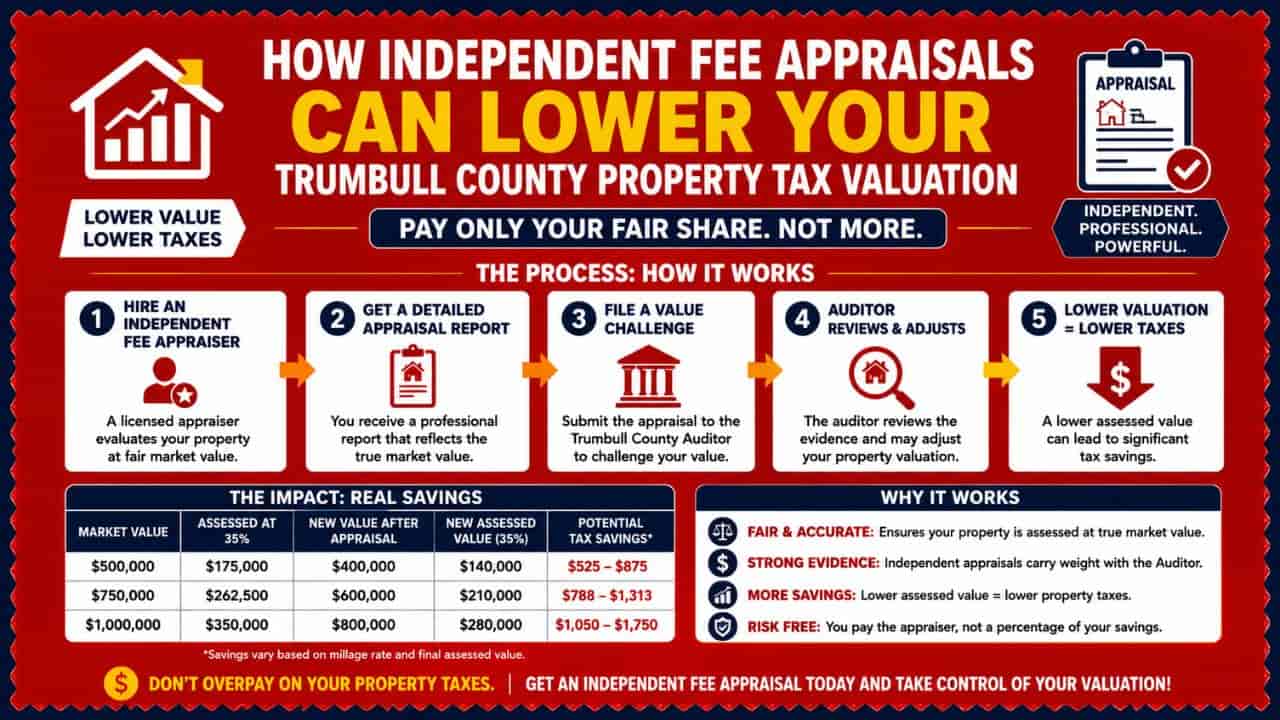
- Guidance for filing appeals on property valuations
By staying informed and working closely with the auditor’s office, homeowners can maximize savings and understand the impact of these new laws.
Final Thoughts
The 2025 property tax reforms in Ohio are designed to create fairer, more transparent taxation while giving local authorities like Trumbull County greater control. Homeowners are encouraged to review their property tax statements carefully, explore applicable credits, and reach out to the auditor’s office with questions.
These reforms (Ohio Property Tax Reforms) mark the first step in a multi billion dollar tax relief plan for Ohio residents, offering both financial savings and confidence that property taxes are now more equitable and locally managed.
FAQs “Trumbull County Property Tax Reform”
1. What are the new Ohio property tax reform bills?
Five bills (HB 124, 129, 186, 309, 335) were signed into law to lower property taxes, improve transparency, and increase local control.
2. How will these bills affect Trumbull County homeowners?
Homeowners may see lower tax bills, inflation-based caps, and expanded Owner Occupancy Credits for primary residences.
3. Who advocated for these reforms?
Auditor Martha Yoder and the County Auditors Association of Ohio (CAAO) helped support and implement these property tax reforms.
4. What is the HB 124 bill about?
HB 124 shifts property valuation authority back to local auditors, ensuring more accurate and locally managed assessments.
5. What does HB 129 do?
HB 129 removes 237 schools from the 20 Mill Floor and closes loopholes used to raise taxes without voter awareness.
6. How does HB 186 help homeowners?
HB 186 caps 20 Mill Floor revenue to inflation, introduces credits for the second half of 2026 bills, and increases Owner Occupancy Credits.
7. What changes does HB 309 bring?
HB 309 gives the County Budget Commission clear authority to review and adjust tax rates and local budgets for accountability.
8. How does HB 335 impact property taxes?
HB 335 caps inside millage revenue to inflation, helping homeowners avoid sudden increases in annual tax bills.
9. How can Trumbull County homeowners apply for credits?
Homeowners can contact the Trumbull County Auditor’s Office to learn about Owner Occupancy Credits, exemptions, and appeal procedures.
10. When will the tax savings take effect?
Some benefits, including credits and revenue caps, start applying to property tax bills for the second half of 2026, depending on your property’s valuation.;