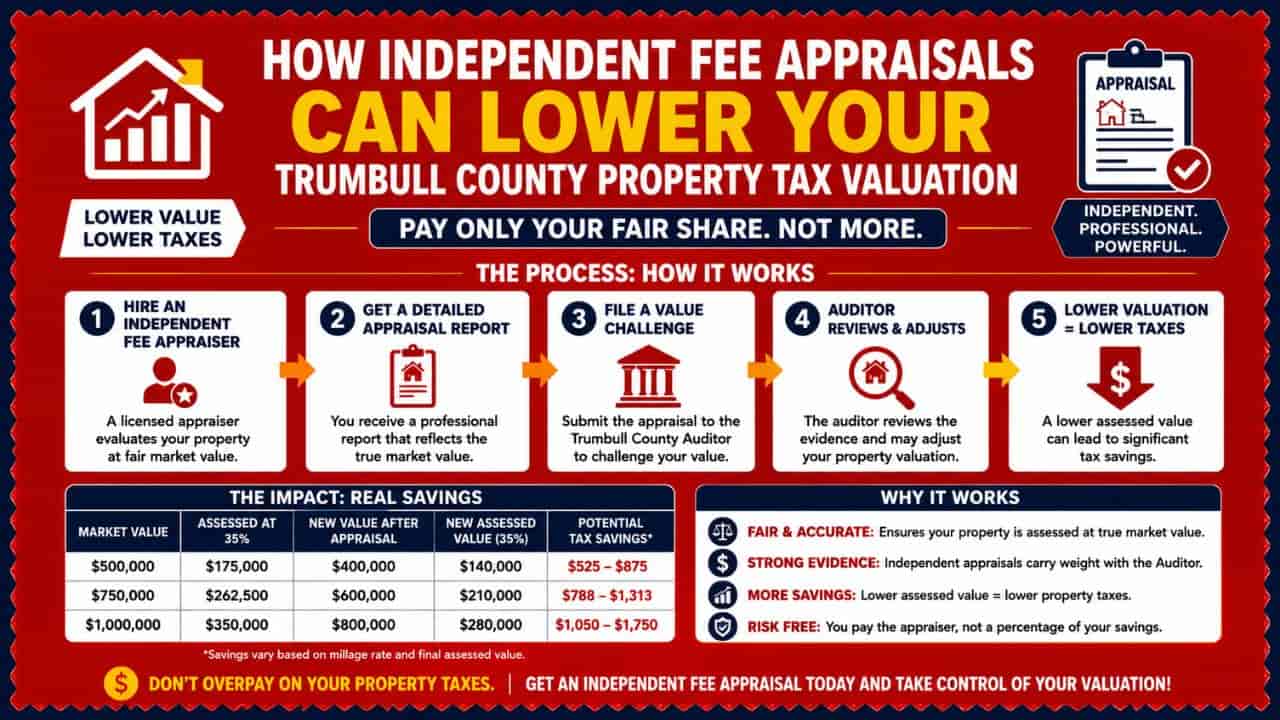
For Ohio farmland owners, agricultural producers, and rural real estate investors, managing operational overhead requires a clear understanding of local property tax structures. Farmland valued at its “highest and best use” often faces crushing tax bills driven by nearby commercial or residential development. To protect working farms, Ohio utilizes the Current Agricultural Use Value (CAUV) program. This statutory system appraises qualifying acreage based solely on its agricultural productivity rather than its speculative market value.
However, every three years during mandated countywide updates, the Ohio Department of Taxation rolls out updated soil value tables that directly impact local tax duplicates across Trumbull County.
The Administrative Framework: Who Calculates CAUV Soil Values?
A common misconception among local property owners is that individual county auditors invent or set agricultural land values from scratch. Under Ohio Revised Code (ORC) Section 5713.31, the legal responsibility for valuing real estate is carefully divided between state and local municipal offices.
The Role of the State Department of Taxation
The Ohio Department of Taxation establishes the master CAUV tables annually for each of the approximately 3,500 distinct soil types mapped across the state. State economists use a highly complex income capitalization model that tracks macro-economic data, including rolling crop prices, regional fertilizer and fuel inputs, and farm credit interest rates. The state outputs these standardized per-acre figures to ensure uniformity across county lines.
The Local Authority: Trumbull County Auditor’s Role
The local county auditor functions as the administrative gatekeeper who applies these state-mandated values to individual tax parcels. The Trumbull County Auditor uses its GIS and Tax Map Department to overlay satellite imagery with official soil maps, field-checking parcels to calculate exactly how many acres of a specific soil code exist on a farm.
During mandated update cycles such as the triennial update years, the Trumbull County Auditor’s office executes this precise translation of state soil metrics into localized property tax values. The auditor’s primary responsibility is to verify actual land use, confirm agricultural acreage totals, and enforce strict statutory filing deadlines to protect the integrity of the local tax duplicate.
Statutory Eligibility Requirements for Trumbull County Farmland
Farmland does not automatically receive a CAUV reduction. To transition a real estate parcel from standard market valuation to an agricultural use value assessment, landowners must meet strict statutory prerequisites under Ohio law.
Agricultural Use Definition: Under Ohio administrative guidelines, commercial agricultural use includes the active production of field crops (such as corn, soybeans, and wheat), timber, tobacco, fruits, vegetables, nursery stock, sod, flowers, and commercial animal or poultry husbandry.
- The 10-Acre Rule:
The parcel or contiguous tracts of land under identical ownership must consist of 10 acres or more devoted exclusively to commercial agricultural production for the three calendar years preceding the application date. - The Gross Income Threshold:
If a farm encompasses less than 10 acres of total space, it can still qualify for CAUV status if it generates a certified average annual gross income of at least $2,500 from agricultural sales during the preceding three-year window. - Initial Application Costs:
Landowners must file an initial application with the county auditor’s office between the first Monday in January and the first Monday in March. State law mandates a $25 initial filing fee per application, which finances the program’s local administrative costs.
Inside the Formula: How CAUV Net Income Values Are Derived
The agricultural use value of a specific soil type is determined through an income approach to appraisal. Rather than looking at what a nearby developer paid for acreage, the state calculates what a farmer can reasonably earn from the dirt.
The net capitalization formula is structured as follows:

To arrive at the net income per acre, the state calculates gross farm income based on the average yields of corn, soybeans, and wheat (the three dominant crops used in the Ohio formula) and subtracts typical non-land production costs. To prevent erratic year-over-year tax spikes, the formula implements a seven-year rolling average. Economists take the data from the previous seven years, eliminate the highest and lowest single-year values, and average the remaining five years.
| CAUV Formula Input Component | Method of Data Collection | Local Impact on Soil Values |
| Crop Prices (Per Bushel) | Monitored via surveys of active grain elevators across the State of Ohio. | Higher market prices drive up gross income, increasing final soil values. |
| Non-Land Production Costs | Compiled from comprehensive farmer surveys managed by The Ohio State University. | Includes seed, fertilizer, fuel, and equipment; rising input costs lower net returns. |
| Capitalization Rate (Denominator) | Based on a 15-year fixed-rate mortgage from Farm Credit Services (40% equity, 60% debt). | Because it functions as the denominator, a lower interest rate causes soil values to skyrocket. |
Step-by-Step Guide: Managing Your CAUV Status and Avoiding Recoupment
Maintaining your agricultural property tax reduction requires ongoing administrative diligence. A single missed deadline can trigger severe financial penalties. Follow this step-by-step framework to secure your savings.
Step 1. Submit the Mandatory Annual CAUV Renewal Form ( File DTE 109A)
Every year after your initial acceptance, you must file a renewal. The Trumbull County Auditor mails DTE Form 109A to enrolled owners in early January. You must verify that the agricultural use has not changed, sign the form, and return it to the auditor’s office before the first Monday in March. Annual renewals carry no filing fee.
Step 2. Monitor Local Triennial Updates and Reappraisal Schedules ( Track Triennials)
Ohio property values operate on a six-year reappraisal cycle with an automatic triennial update in the third year. Review your property record card online during update years to see how newly adjusted state soil tables have impacted your specific parcel’s assessed value.
Step 3. Request a Soil Map Breakdown via the GIS Department (Map Soil Types)
If your tax bill jumps unexpectedly, contact the auditor’s GIS/Tax Map Department. Request an itemized soil breakdown sheet. This document details the exact acreage of each soil code (such as CcA or Lyb) active on your land, allowing you to cross-reference the state’s master value list.
Step 4. Understand the Three-Year Recoupment Penalty Before Modifying Land ( Prevent Conversion)
If you clear timber, stop farming, or sell a portion of your tract to a commercial developer, a conversion of land use occurs. Under ORC Section 5713.34, the auditor is legally required to levy a recoupment charge equal to the total tax savings achieved over the previous three years, which attaches as an immediate tax lien on the property.
Proven Solutions for Common CAUV Challenges
If you encounter administrative hurdles or escalating valuations on your acreage, consider these professional real estate solutions:
- Leverage the Idle Land Provision: If a piece of farmland must lay fallow due to severe weather, crop rotation, or participation in a federal conservation program, the law allows the land to remain idle for up to one year without triggering a disqualification or recoupment charge.
- Audit Labeled Woodland Acreage: The CAUV formula values commercial woodland at significantly lower rates than standard cropland due to extended harvesting timelines. If parts of your active fields have naturally reverted to brush or woods, request an updated GIS boundary review from the auditor to reduce those acres to the lower woodland tax bracket.
- Contest Values via the Board of Revision: While you cannot contest the state’s baseline soil formula, you can contest how the local auditor applies it. If the county’s GIS map incorrectly labels highly productive silt loam on an area that is actually an unusable, rocky ravine, file a complaint with the Trumbull County Board of Revision (BOR) between January 1st and March 31st to request a structural acreage reclassification.
Conclusion
The Current Agricultural Use Value program remains a crucial mechanism for preserving open spaces and protecting family farms across Northeast Ohio. By tracking how the Ohio Department of Taxation calculates shifting crop variables, remaining compliant with annual Trumbull County Auditor filing deadlines, and calculating operational margins against moving interest rates, property owners can optimize their tax exposure. Active management of your CAUV status ensures your agricultural investments remain financially viable and legally protected across Trumbull County’s diverse rural landscape.
FAQs
What is the deadline for Trumbull County CAUV renewal applications?
The statutory deadline to submit your annual CAUV renewal (DTE Form 109A) to the Trumbull County Auditor is the first Monday in March. Late filings trigger program removal.
How often do Ohio CAUV soil value tables update?
The Ohio Department of Taxation updates CAUV soil value tables every three years during mandated countywide triennial updates or sexennial reappraisals to adjust for shifting agricultural net income.
What is the Ohio CAUV tax recoupment penalty rule?
Under ORC 5713.34, converting certified agricultural farmland to non-commercial use triggers a mandatory savings recoupment charge covering the previous three tax years as an immediate property lien.
Can tracts under 10 acres qualify for Trumbull County CAUV?
Yes. Parcels under 10 acres qualify if they generate an average annual gross agricultural income of at least $2,500 during the three calendar years preceding application.
Why did my Trumbull County agricultural land values increase?
CAUV values use a seven-year rolling average with a time lag. Past years of high commodity crop prices can push current tax assessments up despite dropping spot markets.