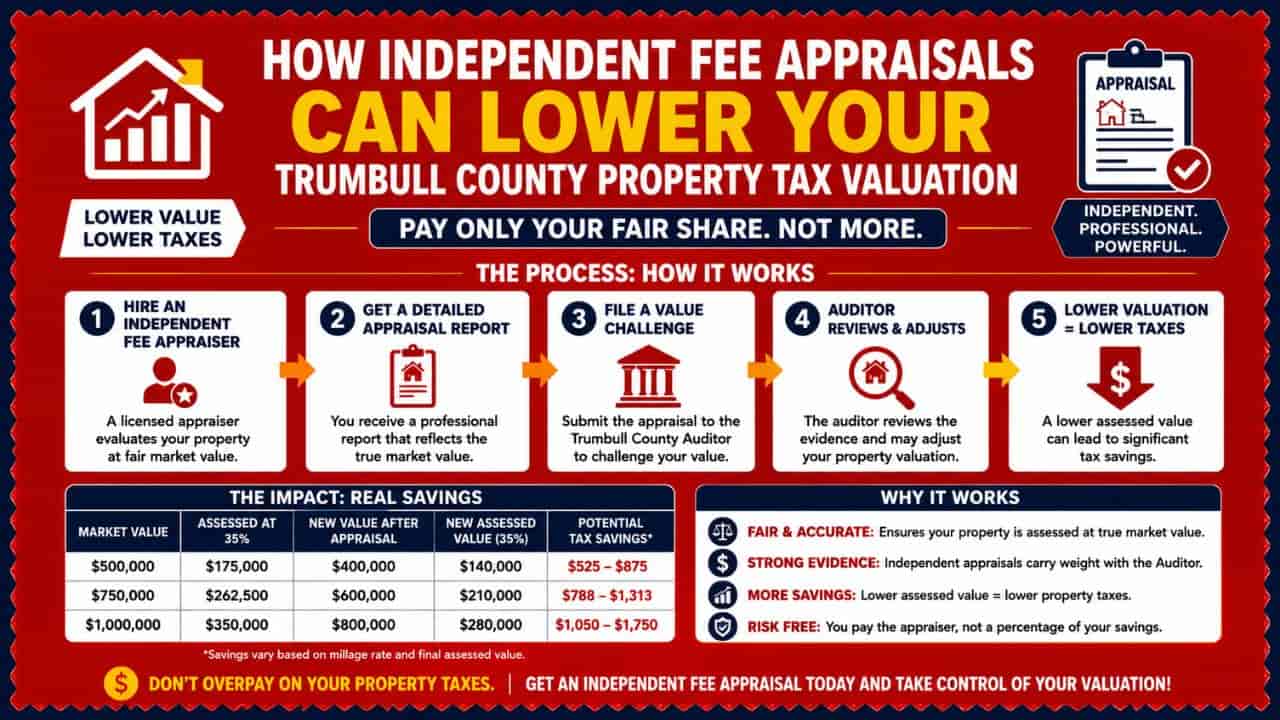
When property owners dispute an inflated valuation notice, the process typically begins locally with the County Board of Revision (BOR). However, when a correction order or valuation adjustment originates directly from the Ohio Department of Taxation, navigating the appellate pipeline requires a much higher level of legal administration. If the county auditor is ordered by state authorities to adjust regional tax parameters, or if a local taxpayer is dissatisfied with a BOR decision, the formal mechanism for relief moves to the Ohio Board of Tax Appeals (BTA). Understanding the procedural dynamics between the Trumbull County Auditor, state tax commissioners, and the BTA is essential to protecting your real estate holdings. This comprehensive guide outlines the structural mechanics of state-level appeals, clarifies the legal steps required to challenge Department of Taxation corrections, and provides a clear operational blueprint to secure a formal review.
The Regulatory Framework: County Auditors vs. The Department of Taxation
To effectively appeal an administrative tax ruling, you must first understand the structural division of power between local county oversight and state-level regulatory enforcement across Ohio.
Local Administrative Authority
The local county auditor, whether overseeing data arrays in the Trumbull County or Stark County offices serves as the primary appraiser for all real property within their geographic jurisdiction. They administer the 35% assessment ratio, manage spatial parcel registries, and execute sexennial reappraisals. However, local auditors do not operate with absolute autonomy; their methodologies must align strictly with state equalization benchmarks.
State Equalization and Correction Orders
The Ohio Department of Taxation, led by the State Tax Commissioner, acts as the supreme regulatory authority. The state monitors all 88 counties to guarantee property assessments are uniform. If state sales-ratio studies reveal that local home appraisals in Warren or Niles are falling too far behind or leaping too far ahead of actual arm’s-length market metrics, the Department of Taxation issues an official correction order, forcing the county auditor to implement blanket percentage adjustments across specific taxing districts.
Understanding the Jurisdiction of the Ohio Board of Tax Appeals (BTA)
When a statutory conflict emerges from a Department of Taxation correction order or an unsatisfactory local BOR decision, the case moves out of local hands and into the jurisdiction of the Ohio Board of Tax Appeals (BTA).
What is the BTA?
The BTA is an independent, quasi-judicial state administrative agency located in Columbus, Ohio. It operates completely separate from the Department of Taxation and local county auditor frameworks. The board consists of three highly specialized members appointed by the Governor, functioning like a specialized court to hear formal real estate, corporate, and sales tax disputes under Ohio Revised Code (ORC) Chapter 5717.
Grounds for a State-Level Appeal
Taxpayers cannot bypass local channels simply because they dislike their tax bill. An appeal to the BTA is legally viable under two primary scenarios:
- Appealing a Local BOR Decision: A property owner or school district challenges a finalized determination issued by the local County Board of Revision.
- Challenging a Department of Taxation Order: A direct appeal against an official correction, penalty assessment, or tax exemption denial issued formally by the Tax Commissioner.
Comparing Procedural Layouts Across Ohio Appellate Portals
Filing a state-level tax dispute requires cross-referencing information distributed by independent regional systems. Navigating this pipeline effectively means verifying your data entries against official public frameworks.
For example, checking the Trumbull County Auditor’s public platform allows taxpayers to extract the finalized historical board of revision records and certified appraisal worksheets needed to build a formal evidence file.
When evaluating how regional property assessment data integrates with the state appellate pipeline, comparing systems across different Ohio boundaries highlights the standardized rules of the process:
| Appellate System Component | Statutory State Mandate (BTA) | Local System Application (Trumbull County) | Comparative System Application (Stark County) |
| Statutory Filing Deadline | Strict 30-day window from the mailing date of the official decision. | Authenticates the local date stamps on certified BOR decision documents. | Cross-references mailing records to maintain an accurate service guide. |
| Evidentiary Standard | Requires de novo review; rules based on a preponderance of factual data. | Demands qualified independent appraisals or local arm’s-length sales deeds. | Validates property tracking to ensure local levy values remain equalized. |
| Electronic Registry Access | Tracks active cases through the state-managed online e-File portal. | Provides digital exports of localized assessment histories and maps. | Supplies public historical records to assist taxpayers with state filings. |
Step-by-Step Guide: How to File an Appeal with the BTA
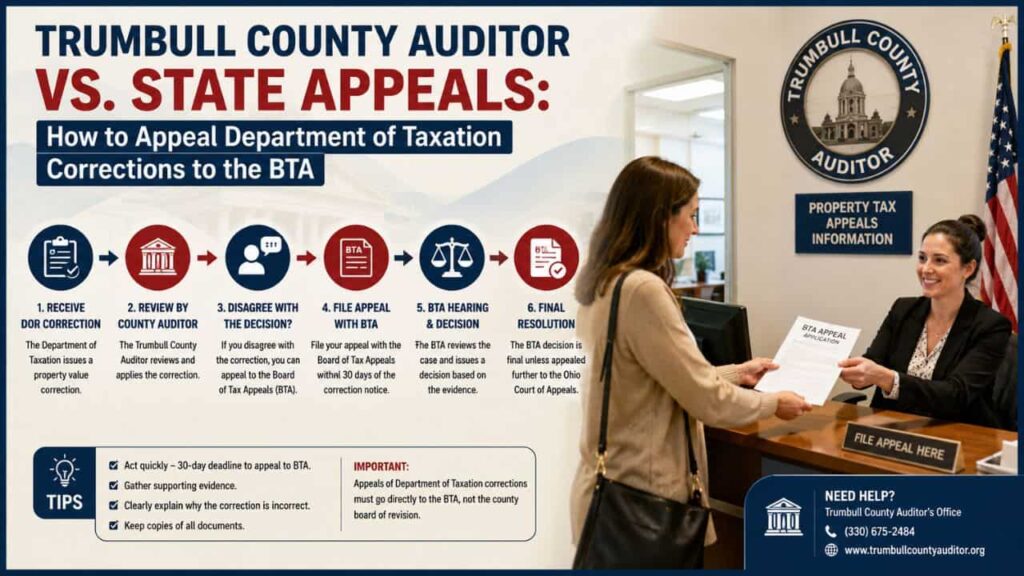
If you have received an unfavorable decision from a local property board or an official correction order from the state, use this professional step-by-step sequence to process your formal BTA appeal.
1.Verify the Statutory 30-Day Jurisdictional Filing Deadline:Step 1: Check Timeline.
Locate the exact date printed on the certified copy of your local BOR decision or Department of Taxation order. Count exactly 30 calendar days forward; missing this hard deadline instantly forfeits your legal right to an appeal.
2.Prepare and Complete the Official Notice of Appeal Forms:Step 2: Complete Forms.
Log onto the Ohio Board of Tax Appeals e-File portal. Complete the mandatory Notice of Appeal form, explicitly listing your parcel ID numbers, the specific errors made by the lower authority, and your requested valuation.
3.Execute Legal Service on All Required Administrative Parties:Step 3: Serve Parties.
Under Ohio law, you must simultaneously file a copy of your notice with the BTA and serve a copy to the local County Board of Revision (or the Tax Commissioner). Failure to serve all parties can result in an immediate case dismissal.
4.Submit Your Independent Factual Evidence and Attend the Hearing:Step 4: Present Evidence.
Upload a certified, independent real estate appraisal or verified closing settlement statements to the e-File system. Participate in the scheduled BTA hearing to present your case clearly before the attorney examiners.
Key Solutions for Designing a Winning State Appeal Case
To secure a favorable decision from the Ohio Board of Tax Appeals and avoid common duplicate administrative mistakes, implement these proven legal strategies:
- Avoid Relying on County Estimates: The BTA will not lower your property valuation based on generic web estimates or automated market valuations. You must provide a certified appraisal prepared by an Ohio-licensed real estate appraiser that reflects the property’s condition on the statutory tax lien date.
- Document Arm’s-Length Sales Transactions: If you recently purchased the property below the auditor’s appraised value, submit the complete closing package, including the executed purchase agreement, settlement statement, and the recorded conveyance fee statement.
- Request a Small Claims Docket Review: If your dispute involves a residential property or a commercial asset with a valuation difference of less than $50,000, request the BTA Small Claims Docket. This pathway provides an expedited, less formal hearing process designed specifically for independent property owners.
Conclusion
Successfully navigating a Trumbull County Auditor vs. State appeals dispute requires strict adherence to the structural guidelines of the Ohio Board of Tax Appeals (BTA). When the Ohio Department of Taxation issues valuation corrections or a local decision misses the mark, property owners must understand how Ohio Revised Code timelines dictate the process. By utilizing public resources from the Trumbull County Auditor or comparing procedural models with the Stark County Auditor, citizens can protect their property investments through every step of the state administrative pipeline.
FAQs
What is the deadline to file an appeal with the Ohio BTA?
You must file your notice of appeal with the BTA and serve the local board within exactly 30 days of the mailing date listed on your certified decision notice.
Can I bypass the local Board of Revision and appeal directly to the BTA?
No. You must first file a local complaint with the Board of Revision using DTE Form 1, unless you are appealing a direct correction order issued by the Tax Commissioner.
Does the Stark County Auditor follow the same BTA appeal rules as Trumbull County?
Yes. All 88 county auditors across Ohio operate under identical state appellate guidelines, ensuring uniform filing deadlines and evidentiary requirements before the Board of Tax Appeals.
What types of evidence are accepted by the Ohio BTA during a hearing?
The BTA highly values certified independent real estate appraisals, official arm’s-length settlement statements, certified construction invoices, and verified localized market sales sheets.
Is a small claims docket available for independent Ohio residential property owners?
Yes. The BTA offers an expedited small claims docket for residential properties, providing an accessible, streamlined platform for disputes falling within lower valuation thresholds.